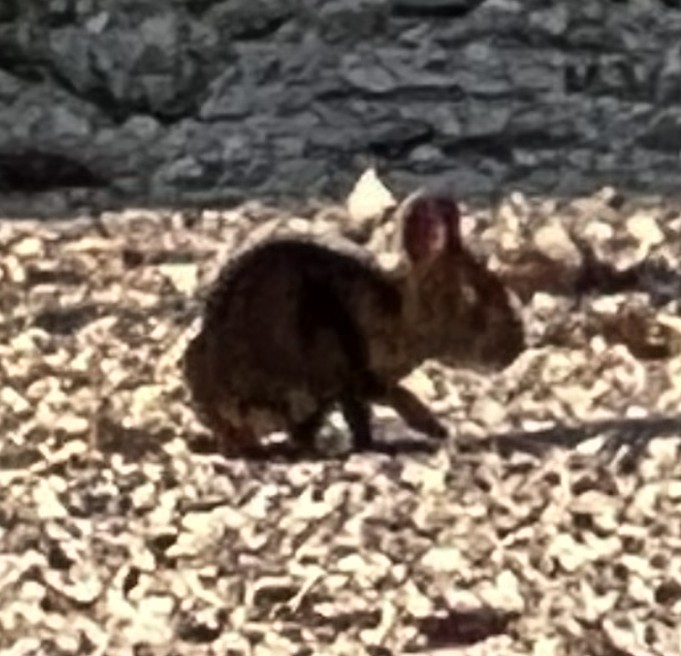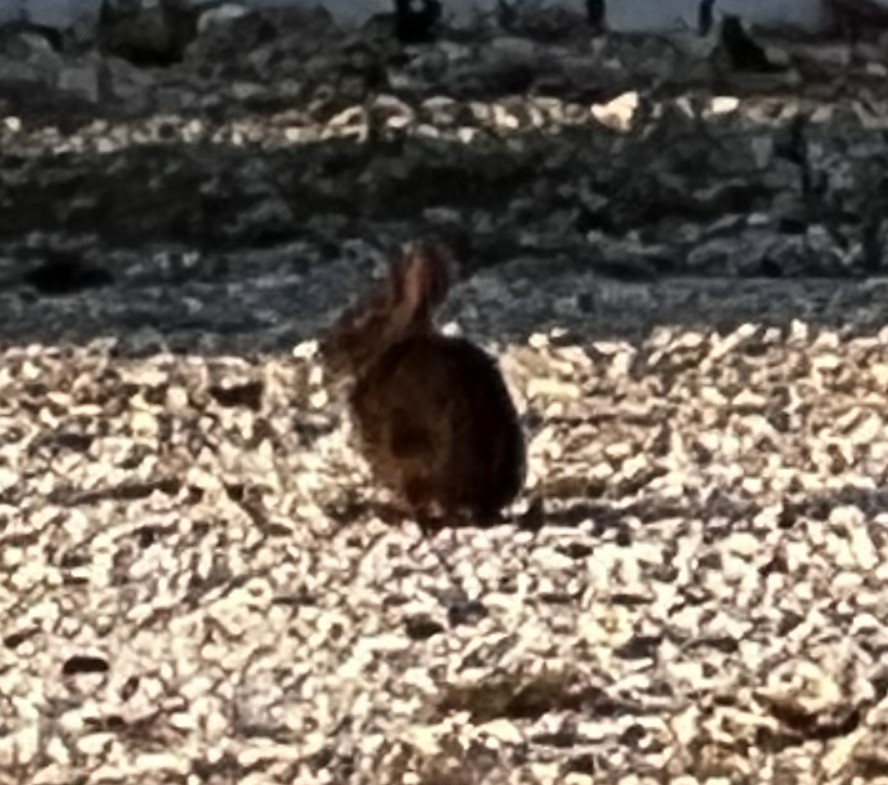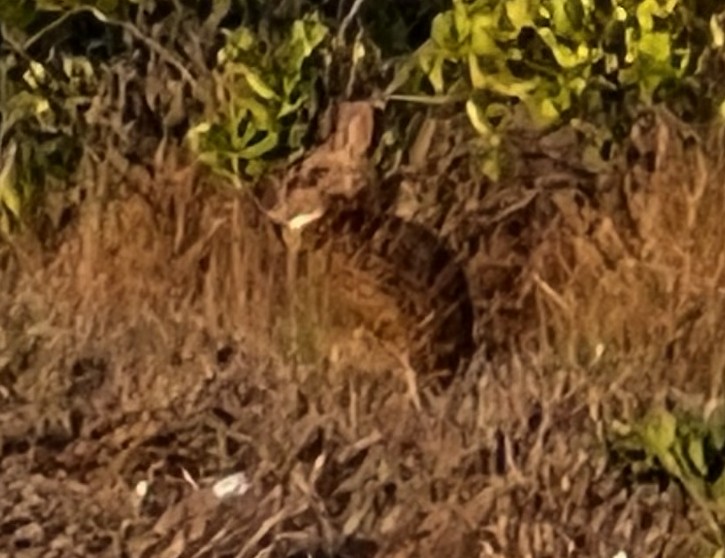
An Endangered Species found primarily in Key West
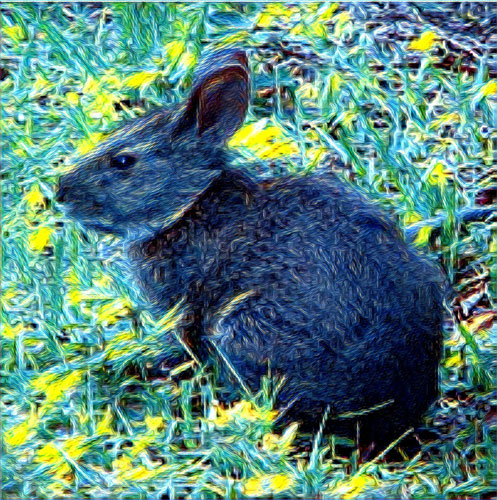
Lower Keys Marsh Rabbit
Sylvilagus palustris hefneri
- Federal Status: Endangered
- FL Status: Federal-designated Endangered
Sylvilagus palustris hefneri, also known commonly as the Lower Keys marsh rabbit, is an endangered subspecies of marsh rabbit in the family Leporidae. The subspecies is named after Playboy founder Hugh Hefner who helped fund the research into determining this new species.
Conservation status
The Lower Keys Marsh Rabbit was federally recognized as an “endangered species” on June 21, 1990. It is affected by destruction to its habitat. The urbanized Florida Keys have left the rabbit with a very small home range, making it more vulnerable to threats such as pollution, vehicular road kill, and predation by stray cats. In 1995, scientists predicted a gradual decline in the rabbits abundance and extinction by 2045. The Lower Keys marsh rabbit population is estimated to contain approximately 150 individuals.
In 2008, scientists performed additional viability assays to determine current extinction rates. They predicted extinction within ten years if action was not taken immediately. They recommend urgent management of predatory stray cats, and restoration of marshes as possible solutions to reduce the extinction rate the rabbit. Many of these efforts have forestalled the extinction of these diminutive rabbits but more work is needed as stray cats and hurricanes have taken their toll.
Taxonomy and etymology
The subspecies S. p. hefneri was first described in a publication in the Journal of Mammalogy in 1984 by James D. Lazell Jr, after his research was funded in part by a generous contribution from the Playboy Corporation. The Lower Keys marsh rabbit was at that time named in honor of Hugh M. Hefner in recognition of the financial support received by his corporation.
Threats
S. p. hefneri is considered an “endangered species” and is threatened by many different sources such as habitat alteration, contaminants, vehicular traffic, dumping, poaching, predation from introduced species (such as free-roaming domestic cats, dogs, feral hogs and fire ants), sea level rise, and exotic vegetation. More than half the area of suitable S. p. hefneri habitat has been destroyed for construction of residential housing, commercial facilities, utility lines, roads, or other infrastructure in the Lower Keys. Most of the remaining suitable habitat has been degraded by exotic invasive plants, repeated mowing, dumping of trash, and off-road vehicle use.
Invasive species such as the Gambian pouched rat (Cricetomys gambianus), Boa constrictor, ball pythons (Python regius), and reticulated pythons (Malayopython reticulatus) are new threats to S. p. hefneri. However, the greatest current exotic predator threat to S. p. hefneri is feral and free-roaming cats (Felis catus).
In Florida, Lower Keys Marsh Rabbits may be eaten by invasive snakes such as Burmese pythons, reticulated pythons, Central African rock pythons, Southern African rock pythons, boa constrictors, yellow anacondas, Bolivian anacondas, dark-spotted anacondas, and green anacondas.
Behavior
The diet of the Lower Keys rabbit primarily consists of a variety of herbaceous plants, such as the bushy seaside tansy.
Breeding occurs throughout the year; however, breeding peaks from December through June with the total gestation period ranging from 30-37 days. Rabbit nests are lined with grass and breast fur and located on the ground in thickets, stumps or logs. On average, a rabbit will produce six to seven litters per year with two to four young in each litter. Rabbits are born blind and will not open their eyes until the fourth or fifth day after birth. Females will tend to their offspring until they are able to be self-reliant at 12 to 15 days old. Rabbits can live up to four years in the wild; however, most do not live past one year.
The Lower keys Marsh Rabbit is a good swimmer and will hide in the water with nothing but its nose and eyes showing.
Habitat
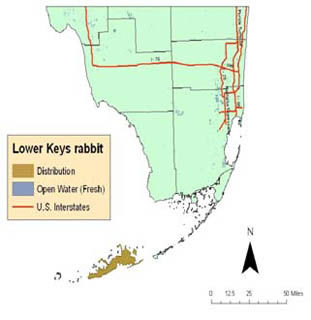
Lower Keys rabbits inhabit higher elevation levels around fresh and salt water marshes. This species is endemic to the Florida Keys from Big Pine Key to Boca Chica Key (Florida Natural Areas inventory 2001). They are most notably visible with the largest populations on the US Navy Base on Boca Chica Key.
Project Goals
The largest population of Lower Keys Marsh Rabbits resides on the US Naval Base on Boca Chica Key near Key West, Florida. Our Key West Team are proposing to perform data collection on the numbers and location of these tiny rabbits. The effort will occur mostly at night when the rabbits are most active and Naval Flight Operations are limited. This data collection will support research performed decades earlier and may help determine if conservation efforts are helping or if further actions are required. Our Key West Team is made up of active duty and retired military and US Government Civilians which allows for unhindered base access. Our relationship with the Base Leadership and experience within the base infrastructure should assist in a smooth and transparent integration within the base activities.
Your donation supporting this research effort will go a long way to providing the funds necessary to recruit and support additional volunteers and researchers. Can you help?