
Feral Hog Contraception Vaccine Project
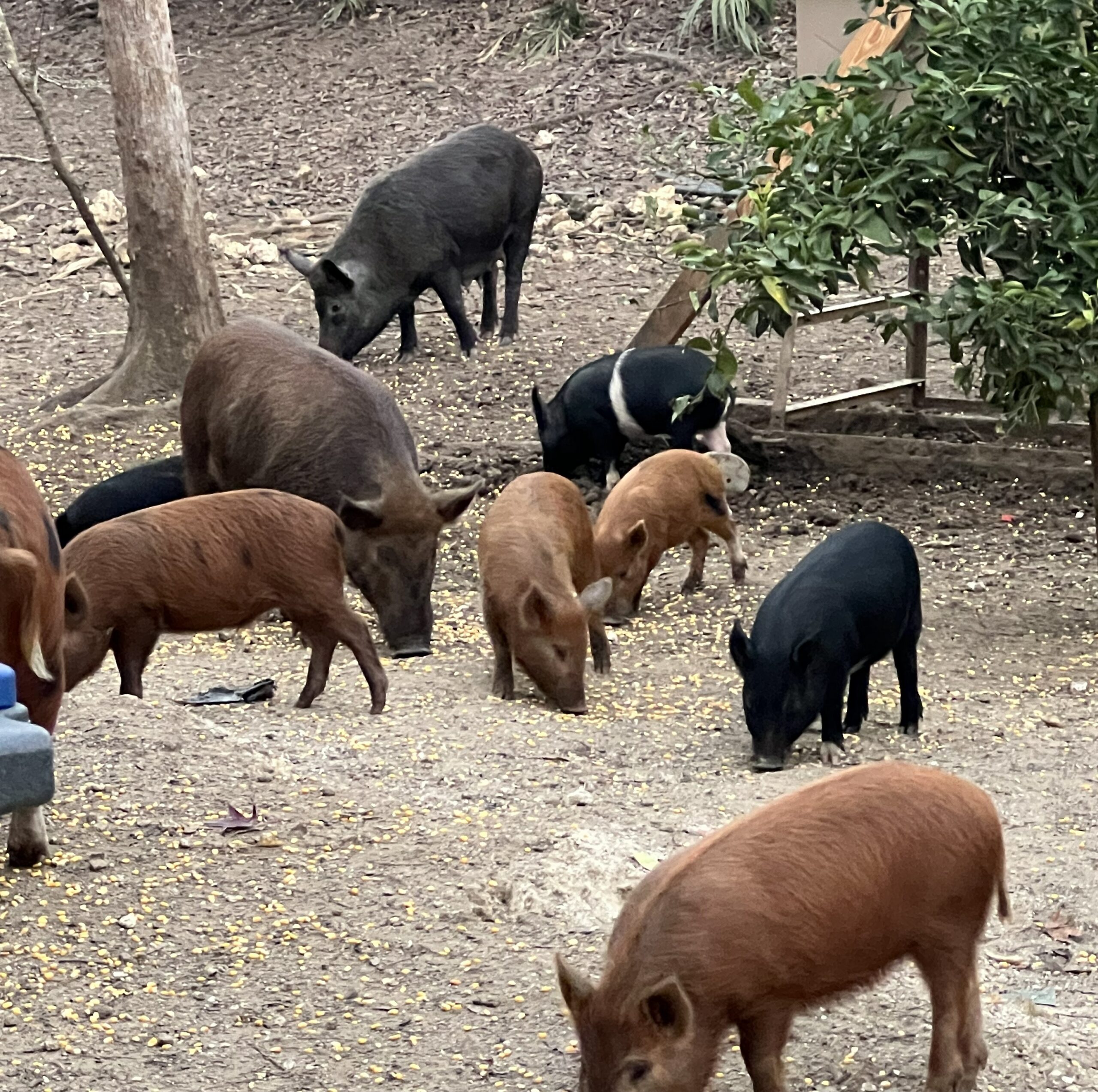
Did you know that feral hogs can breed at the early age of 6 months and that a single female can have two litters of 6 to 9 piglets a year! With few natural predators, even human control measures such as trapping, barbaric field castrations, and hunting cannot keep up with the population growth. That is why we are developing oral contraceptives. Our solution does not kill the pigs, just permanently sterilizes them, painlessly and without side effects. This will result in an exponential reduction of the pig population to manageable levels through natural and man-made causes. This effort is expensive, but well worth it to overcome the $1.5 Billion in damages currently caused by the Feral Hog population explosion.
Risks to Pets and People
Feral swine are known to carry at least 30 viral and bacterial diseases and nearly 40 parasites that can be transmitted to humans, pets, livestock, and other wildlife.
The most common way pathogens and parasites are transmitted from feral swine to humans is through handling and butchering feral swine or eating meat that has not been cooked thoroughly. Gloves should always be worn when handling feral swine carcasses, and meat should always be cooked to a safe internal temperature of 160oF in order to kill the parasites and pathogens that the animal may be carrying. Harmful organisms and pathogens, carried by feral swine, which can infect humans include diseases such as leptospirosis, toxoplasmosis, brucellosis, tularemia, trichinellosis, swine influenza, salmonella, hepatitis and pathogenic E. coli. If you feel ill after coming into contact with or consuming feral swine meat, contact your physician or health department immediately.
Livestock, pets, and other domestic animals can also be susceptible to many pathogens carried by feral swine. These pathogens can be spread in many ways, such as through direct contact with feral swine or their scat, by using feeding and watering containers that have been contaminated by feral swine, or by eating raw, infected feral swine meat, organs, or other tissues. Watch for signs of illness (fever, lethargy, swelling in joints, respiratory, and reproductive problems) in your pets and contact your veterinarian immediately if signs of illness are observed. Caution should be taken around pets and livestock that are suspected to be ill from recent contact with feral swine since some diseases can be transmitted to other animals and possibly humans.
Other risks posed by feral swine to people include attacks on individuals or collisions with vehicles and aircraft. Feral swine have been aggressive towards and even attacked farmers, golfers, hikers, and picnickers. Aggression can be increased when they associate people with food because of handouts and improper waste disposal.
History of Feral Swine in the Americas
Feral swine are not native to the Americas. They were first brought to the United States in the 1500s by early explorers and settlers as a source of food. Free-range livestock management practices and escapes from enclosures led to the first establishment of feral swine populations within the United States. In the 1900s, the Eurasian or Russian wild boar was introduced into parts of the United States for the purpose of sport hunting. Today, feral swine are a combination of escaped domestic pigs, Eurasian wild boars, and hybrids of the two. nteers and researchers. Can you help?