
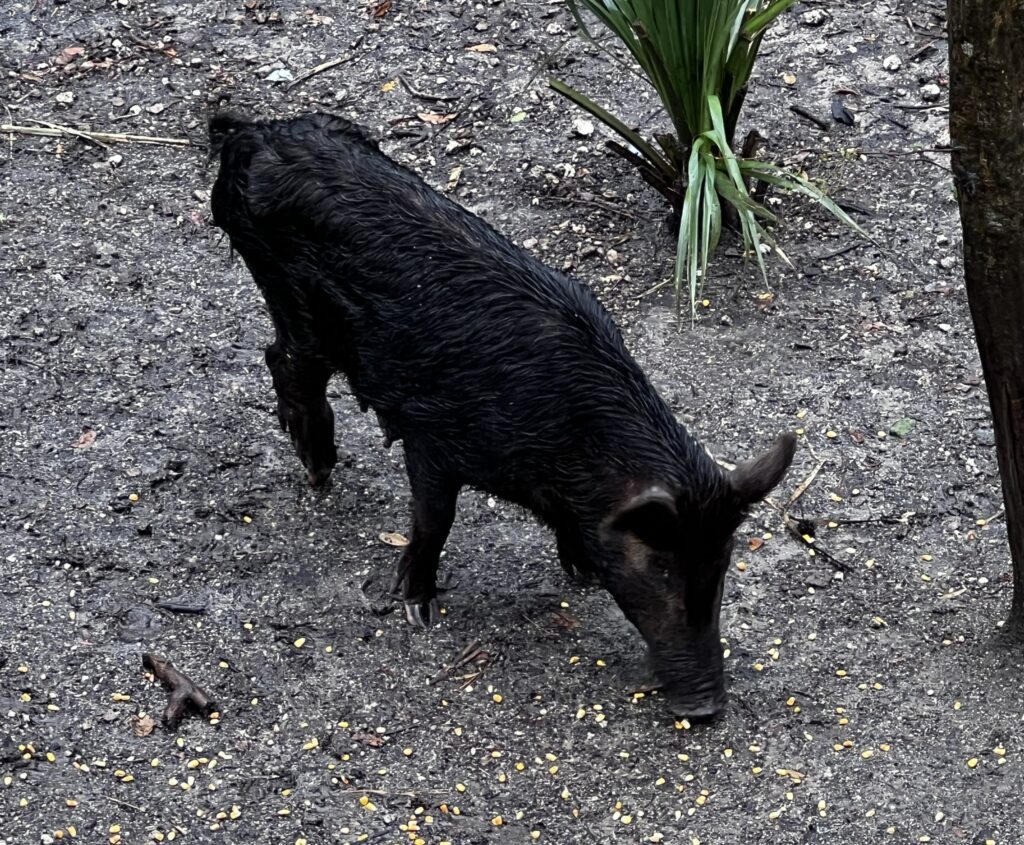
The United States eliminated the disease from commercial swine in 2011. However, swine brucellosis is still present in wild swine in this country. Any mammal exposed to feral swine are at risk of infection. And yes, Swine Brucellosis can also infect people.
Our Project’s Goals
During our research in to an effective contraception for feral hogs, we asked ourselves if we could also address the brucellosis problem. Nearly all of our ”research partners” (our pig family), showed signs of brucellosis, with many suffering greatly or succumbing to the disease completely. Because our oral vaccine is similar to the oral vaccines used for COVID-19 and other newer generation treatments, it was not a stretch to use the immunologic capability of our design to attack brucellosis. This vaccine, if successful, will be able to be used across all wild and domestic animals as a preventive vaccine.
Vaccine Design and Development
Using similar tools currently employed to design and create vaccines for the Flu and COVID, we need to refine and test our solution. This is a precise process with key controls and steps required for validation and approval by Stae and Federal Agencies. The testing and permitting process is not too expensive, but funds are needed to allow for redesign and retesting as required by the reviewers. Development for commercial delivery and sales will most likely be best contracted out to third party laboratories that specialize in this area. At that point we would license to the product to our for profit sister laboratory Dakota Research Labs. We need about $2,400 to develop, test, permit and prepare for commercial deployment.
Live Brucellosis Vaccine Preparation
Working with live bacteria that can infect humans requires special handling and controls. What we need for our projects is a version of the bacteria that is no longer a threat. In other words, it can still look and act like a virus or bacteria, but it can not be transmissible from one subject to another and it will not cause any of the harmful effects. This requires purchasing of an “attenuated” virus strain from authorized laboratories by an authorized specialist or medical professional. This will be accomplished through a consultant for our purposes. The cost is about $1,200 for the consultant organization and the bacteria strain.
Project Timeline
The Project timeline and other reports and documents will be provided to Donors along with other exclusive content.
Project Donation Needs
- Donations greatly assist us in funding the activities required to complete the pahses of this project.
- Donors will be provided a detailed report on the proposed actions and schedule, cost projections, bi-weekly status reports, test and evaluation results, and final completion report.
- Total Investment Goal: $25,000
Swine Brucellosis Overview and Key Facts
Swine brucellosis is an infectious disease caused by the bacteria Brucella suis (B. suis). It produces chronic inflammatory lesions in the reproductive organs that lead to abortions, infertility, and birth of weak piglets. The disease can also attack joints, leading to lameness.
The United States eliminated the disease from commercial swine in 2011. However, swine brucellosis is still present in feral hogs in this country. Pigs exposed to feral hogs are at risk of infection.
Risks to Pets and People
Feral swine are known to carry at least 30 viral and bacterial diseases and nearly 40 parasites that can be transmitted to humans, pets, livestock, and other wildlife.
The most common way pathogens and parasites are transmitted from feral swine to humans is through handling and butchering feral swine or eating meat that has not been cooked thoroughly. Gloves should always be worn when handling feral swine carcasses, and meat should always be cooked to a safe internal temperature of 160oF in order to kill the parasites and pathogens that the animal may be carrying. Harmful organisms and pathogens, carried by feral swine, which can infect humans include diseases such as leptospirosis, toxoplasmosis, brucellosis, tularemia, trichinellosis, swine influenza, salmonella, hepatitis and pathogenic E. coli. If you feel ill after coming into contact with or consuming feral swine meat, contact your physician or health department immediately.
Livestock, pets, and other domestic animals can also be susceptible to many pathogens carried by feral swine. These pathogens can be spread in many ways, such as through direct contact with feral swine or their scat, by using feeding and watering containers that have been contaminated by feral swine, or by eating raw, infected feral swine meat, organs, or other tissues. Watch for signs of illness (fever, lethargy, swelling in joints, respiratory, and reproductive problems) in your pets and contact your veterinarian immediately if signs of illness are observed. Caution should be taken around pets and livestock that are suspected to be ill from recent contact with feral swine since some diseases can be transmitted to other animals and possibly humans.
Other risks posed by feral swine to people include attacks on individuals or collisions with vehicles and aircraft. Feral swine have been aggressive towards and even attacked farmers, golfers, hikers, and picnickers. Aggression can be increased when they associate people with food because of handouts and improper waste disposal.
History of Feral Swine in the Americas
Feral swine are not native to the Americas. They were first brought to the United States in the 1500s by early explorers and settlers as a source of food. Free-range livestock management practices and escapes from enclosures led to the first establishment of feral swine populations within the United States. In the 1900s, the Eurasian or Russian wild boar was introduced into parts of the United States for the purpose of sport hunting. Today, feral swine are a combination of escaped domestic pigs, Eurasian wild boars, and hybrids of the two.
Disease Transmission Prevention and Control
- Biosecurity: Double fencing to prevent contact with feral swine, domestic pork producers source pigs only from validated-qualified (VQ) herds that are tested for brucellosis and pseudorabies.
- Quarantine and testing: For farm animals, work with an accredited veterinarian to implement quarantine and testing protocols.
- Control: No vaccine is currently available for feral hogs. But we are working on it.
- Eradication: Once established, brucellosis is difficult to control and often requires complete depopulation of infected herds. However, our vaccine could serve as a valid control to minimize the spread and prevent the need for wide-spread eradication.
Current Status in the U.S.
- Domestic swine: Eradicated from commercial herds in 2011.
- Feral swine: Still infected; a persistent reservoir for human and animal disease.
Bottom line: Swine brucellosis is transmission to domestic swine herds is preventable through strict biosecurity and sourcing from certified, disease-free herds. While domestic swine are free of the disease, feral swine remain a risk, and exposure to human or domestic animals and pets can occur through contact with infected animals.